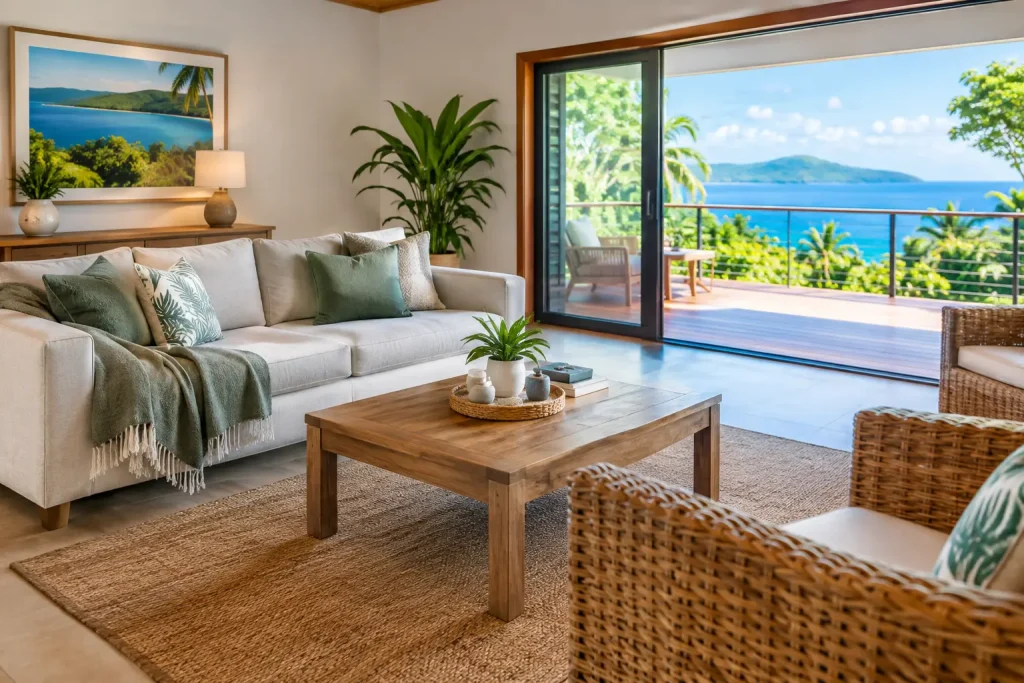

A beachfront outlook can make island homes in Vanuatu feel like an immediate lifestyle decision. The stronger purchases are made more deliberately: by weighing the quality of the title and access against the view, understanding operating costs, and deciding whether the property suits private use, rental income, or both. In a market where each island, coastline and neighbourhood operates differently, those details shape long-term value.
For buyers from Australia, New Zealand and further abroad, Vanuatu offers a compelling combination of tropical living, proximity to the region and a property market with opportunities ranging from established Port Vila residences to substantial coastal land and private island holdings. The right property can be exceptional. It also needs to work reliably when the weather turns, a guest arrives late, or maintenance is required while you are overseas.
What Makes Island Homes Different
An island property is not defined only by being surrounded by water. It may be a residence on a small offshore island, a coastal home reached by boat, a beachfront estate on Efate, or a house in an established community such as Pango, Erakor, Mele Bay or Santo with a distinctly island-based lifestyle. The practical question is how independently the property operates and how easily it connects to services.
A home close to Port Vila may have sealed-road access, mains power, mobile coverage, nearby trades and straightforward provisioning. A more remote holding may depend on a boat, solar and battery storage, water tanks, a generator, on-site staff and careful supply planning. Neither option is automatically better. A remote retreat may deliver privacy and scarcity, while a well-connected waterfront home can be easier to occupy, let and resell.
This distinction should be clear before comparing prices. Two properties with similar bedroom counts and coastal frontage can have very different ownership costs and buyer appeal because their access, infrastructure and permitted use are not alike.
Start With Tenure, Boundaries and Permitted Use
Tenure is the first serious due diligence item for island homes in Vanuatu. Much of the country’s land is customary land, and property interests are commonly held through leasehold arrangements rather than freehold ownership. The lease term, registered interests, boundaries, renewal provisions and conditions attached to the land all deserve close review.
Ask for the current lease documentation and have an appropriately qualified local legal adviser examine it. Confirm the registered proprietor or lessor, remaining lease term, annual rent or other obligations, whether assignments require consent, and whether there are mortgages, caveats, rights of way or other encumbrances. Do not rely on a boundary shown in a sales brochure as a substitute for a survey or title search.
Permitted use matters just as much. A buyer planning a family holiday home may need a different level of certainty from an investor intending to operate short-stay accommodation, a boutique retreat or a hospitality business. Establish what approvals may be required for construction, renovations, commercial activity, jetties, moorings, wastewater systems and any development beyond the existing dwelling.
Check access beyond the front gate
Water access can be a key part of the appeal, but it must be documented and workable. For a boat-access property, consider where passengers embark, whether there is secure all-weather mooring, who maintains the jetty, and how luggage, building materials and supplies reach the house. Tides, prevailing winds and wet-season conditions can change a short crossing considerably.
Road access requires the same attention. Confirm whether the road is public, privately maintained or subject to a shared arrangement. A steep unsealed track can be manageable for a regular resident with the right vehicle, yet deter holiday tenants and future buyers. If the route crosses neighbouring land, make sure access rights are clearly established.
Assess Infrastructure as Carefully as the House
A polished interior does not tell you whether a property can operate comfortably through a period of heavy rain, power interruption or low water supply. Island homes should be inspected as systems as well as buildings.
Water supply is central. Find out whether the home relies on rainwater harvesting, bore water, a community system or deliveries. Check tank capacity, filtration, pump age, water quality and backup arrangements. Ask how the property performs during extended dry spells and how water is managed when the home is occupied by a larger group.
Power arrangements deserve similar scrutiny. Grid-connected properties can still benefit from backup power, while off-grid homes need a realistic assessment of solar capacity, battery condition, generator use and fuel storage. Request recent utility bills where available and ask for service records for major equipment.
Internet and mobile coverage are no longer optional for many purchasers. Remote working, security monitoring, online bookings and guest communication all depend on a reliable connection. Test coverage at the property rather than assuming service levels from a nearby village or resort will apply.
Wastewater, drainage and rubbish management are also practical indicators of a well-run property. A functioning septic system, effective stormwater control and a clear rubbish plan protect both the owner’s experience and the surrounding environment.
Build for the Climate, Not Just the View
Vanuatu’s tropical setting brings heat, humidity, salt air, heavy rain and cyclone risk. These conditions do not make ownership difficult, but they do demand sound construction and a regular maintenance programme.
During inspection, look beyond the presentation of decks and gardens. Ask about roof condition and fixings, window and door protection, drainage, retaining walls, corrosion around metal fittings, timber treatment, ventilation and insurance history. Salt exposure can accelerate wear on air conditioners, appliances, balustrades, gates and marine infrastructure.
Construction methods should match the site. Elevated homes may improve airflow and manage water movement but can require careful inspection of supports and access stairs. Waterfront retaining structures and seawalls should be assessed for condition and ongoing responsibility. A low-maintenance material specification may carry a higher initial cost but reduce disruption and expenditure over time.
Insurance availability and policy exclusions should be checked before contracts are exchanged. Premiums, excesses and cyclone-related requirements can materially affect annual holding costs, particularly for isolated or exposed sites.
Match the Property to Your Income Plan
Some buyers want a private family base. Others want an asset that can generate income when not in use. Both are valid, but the property needs to suit the plan from day one.
A strong holiday-rental prospect usually combines dependable access, attractive presentation, adequate water and power, reliable internet, clear guest instructions and a trusted local management arrangement. A spectacular remote property may command a premium nightly rate, but transfer logistics, staff costs and maintenance can narrow returns. Conversely, a more accessible waterfront house near Port Vila may benefit from a broader tenant pool and lower operational complexity.
Longer-term rentals have different requirements. Expatriate families and corporate tenants often prioritise road access, secure parking, proximity to schools or town, practical kitchens, backup utilities and consistent maintenance. The best lifestyle purchase is not always the best rental asset.
Model the full cost base before treating projected income as a decision-maker. Include management, cleaning, gardening, pool care, boat or vehicle running costs, security, insurance, utilities, repairs, lease obligations and periods without occupancy. A conservative projection provides a better foundation than a peak-season estimate.
Inspect the Local Support Network
A property can be beautifully designed and still be difficult to own if there is no dependable local support. Before committing, identify who will manage keys, grounds, cleaning, urgent repairs, pool servicing and guest arrivals. For offshore homes, ask who can respond when weather prevents normal access.
This is particularly important for absentee owners. A clear caretaker or management arrangement protects the property between visits and gives tenants or guests a reliable point of contact. It also helps preserve presentation when the time comes to sell.
Local market knowledge adds value here. An experienced Vanuatu agent can help buyers compare locations, understand the practical differences between coastal and offshore properties, and identify the information needed for a more confident decision. Ray White Vanuatu can also provide perspective on buyer demand, presentation and likely appeal within the current market.
Choose With the Exit in Mind
Island property is often an emotional purchase, but resale should remain part of the evaluation. Properties with clear tenure, straightforward access, well-maintained infrastructure and a defined use case generally speak to a wider pool of future buyers. Good records for improvements, service work, utility costs and rental performance can make due diligence easier when you sell.
The goal is not to avoid character or compromise on lifestyle. It is to buy a property whose character is supported by sound fundamentals. When the view, access, tenure and operating plan all align, an island home can be more than a beautiful escape – it can be a property you can enjoy, manage and hold with confidence.