A buyer’s first impression of a Vanuatu property is often formed before they arrive. It happens in the listing photographs, through the sense of space in each room and in whether the home looks ready for its next owner. Effective home staging is not about disguising defects or making a house feel unfamiliar. It is about presenting its best, most marketable version with honesty and purpose.
For sellers in Port Vila, Pango, Mele Bay, Erakor, Malapoa, Santo and coastal locations, the right presentation can help buyers understand the lifestyle as well as the property itself. A family house should feel practical. A beachfront residence should draw attention to its setting. An investment property should make its condition and potential easy to assess.
Why home staging matters in Vanuatu
Vanuatu buyers often make decisions across distance. Some are local purchasers inspecting several homes in a week. Others are expatriates, Australian or New Zealand investors, or lifestyle buyers making their first assessment from overseas. Clear photographs and a well-prepared inspection help every buyer move from interest to confidence.
Staging also gives the agent stronger material to work with. A bright, orderly property is easier to photograph, easier to describe and easier for prospective buyers to remember after viewing multiple listings. This does not guarantee a sale or replace accurate pricing, but it can improve the quality of enquiries and support a stronger first inspection.
The aim is not to turn every property into a luxury resort. Over-styling a modest rental investment or family home can feel artificial and may distract from the real selling points. The best approach depends on the property, its likely buyer, its price range and the condition of competing homes on the market.
Start with the features buyers are paying for
Before moving furniture or buying cushions, identify the property’s commercial strengths. This is the foundation of effective home staging. A waterfront home may be selling privacy, outdoor entertaining and sea views. A Port Vila residence may appeal through its proximity to schools, workplaces and services. A landholding may be about access, usable building areas, established gardens or future development potential.
Walk through the property as a buyer would. From the gate to the entry, consider what is immediately visible. Then look at every room and outdoor area. Ask which features deserve attention, and which distractions prevent buyers from noticing them.
For example, if the main deck has a strong outlook, arrange it so buyers can picture morning coffee, family meals or relaxed entertaining there. If a home has generous storage, make it accessible rather than filling it to capacity. If there is a home office, show it as a workable space rather than a spare room holding boxes.
Match the presentation to the likely buyer
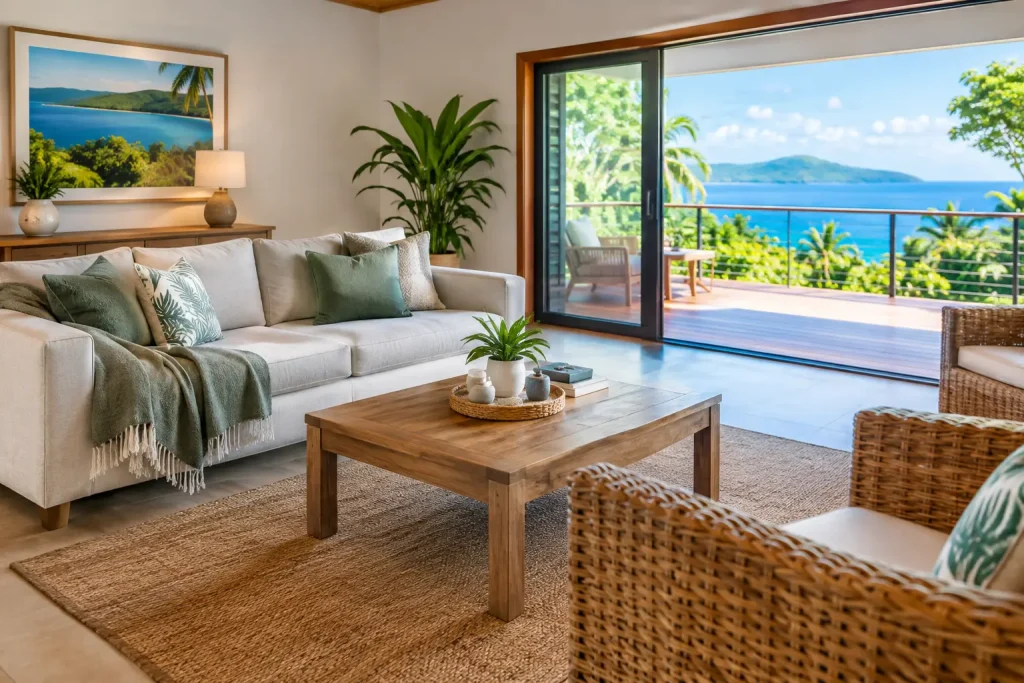
A three-bedroom home near Port Vila may be inspected by families, corporate tenants or investors. It should communicate comfort, practical living and manageable outdoor space. A premium Pango or Erakor property may attract international lifestyle buyers who will place more value on privacy, entertaining areas, finishes and the relationship between indoor and outdoor living.
There is no single formula. A highly personal collection of furniture may suit an owner-occupied home but make it harder for a buyer to picture their own life there. Conversely, stripping every room bare can make the property feel smaller or less inviting. Keep enough furniture to show scale and function, while removing excess pieces that interrupt movement or block light.
Prepare the exterior before the inspection
In tropical conditions, outdoor presentation is not secondary. Gardens, driveways, paths, decks, pools, retaining walls and exterior paintwork are all part of the buyer’s assessment of maintenance and value.
Start with the practical work: mow or trim where appropriate, clear leaves and garden waste, remove unused equipment, tidy the entry and make sure pathways are safe. Clean outdoor furniture, pool surrounds and entertaining areas. If the property has a sea view, check that vegetation and stored items are not unnecessarily obscuring it.
Small maintenance issues are more visible than many sellers expect. Loose gate hardware, damaged screens, stained exterior walls, overflowing gutters or a neglected garden can lead buyers to question the condition of areas they cannot see. Not every repair will deliver a direct dollar-for-dollar return, so focus first on matters that affect presentation, safety and perceived upkeep.
For vacant land, staging means clarity rather than furniture. Mark access points where appropriate, remove rubbish, keep grass and undergrowth under control, and ensure buyers can understand boundaries, terrain and the best areas for building. A clean, accessible site is easier to inspect and easier to value in the buyer’s mind.
Make interiors feel light, clean and usable
A thorough clean remains one of the highest-value preparation steps. Pay particular attention to kitchens, bathrooms, windows, fans, floors and areas prone to tropical humidity. Buyers notice mould, water marks and musty smells quickly, even when the home otherwise presents well.
Open curtains and blinds to bring in natural light, but manage harsh sun where it affects comfort or photography. Turn on working lights before inspections, particularly in darker hallways, bathrooms and storage areas. Air-conditioners and ceiling fans should be clean and operational, as buyers in Vanuatu will reasonably assess cooling and ventilation as part of daily liveability.
Decluttering matters because it reveals room size and storage. Remove personal documents, excess toiletries, laundry, pet items and crowded surfaces. Kitchen benches should be mostly clear. Bedrooms should have made beds and enough open floor area to show their proportions. In living rooms, create a simple arrangement that demonstrates how people might gather without making the room feel overfilled.
A neutral presentation generally attracts the broadest market. That does not mean every room needs to be beige. It means bold décor, highly specific artwork and personal memorabilia should not dominate the inspection. A few well-chosen pieces can add warmth, colour and a sense of quality without competing with the property.
Photograph for the decision buyers make first
Most buyers will see the listing before they see the property. The home must therefore be ready before professional photography, not only before the first open inspection. Last-minute cleaning after the photos are taken does little to improve the online impression.
Choose a time of day that flatters the property’s strongest aspects. Coastal homes may photograph beautifully when outdoor areas are shaded and views are clear. Gardens often look their best after tidying and watering, but avoid photographing immediately after heavy rain if paths, driveways or decks appear messy. Interior images need natural light, but should avoid blown-out windows that hide the outlook.
Photography should communicate the home accurately. Wide, well-composed images help buyers understand layout and proportion, while detail images can support a premium finish or a distinctive feature. Avoid trying to conceal permanent shortcomings. Buyers will identify them at inspection, and a mismatch between photos and reality can weaken trust.
Stage for inspections, not just the camera
The property should feel calm and easy to inspect on viewing day. Keep parking and access clear, secure pets, remove valuable personal items and make sure gates and doors can be opened without difficulty. Where practical, allow natural airflow through the home and ensure outdoor areas are clean and usable.
Scent should be handled carefully. Fresh air and a clean home are preferable to heavily fragranced products, which can make buyers wonder what they are meant to cover. Soft background music is rarely necessary. Buyers need to hear the property as well as see it, particularly near roads, neighbouring homes or beachfront areas.
If the home is occupied, staging needs to be workable for daily life. Sellers do not need to live in a showroom for months. A clear plan for quick resets before photography and inspections is usually more realistic: clear benches, put away laundry, open curtains, tidy outdoor areas and secure personal effects.
Use professional advice where it will change the result
Some properties benefit from a stylist, particularly premium homes, vacant residences or listings with dated or mismatched furnishings. Others only need a focused clean, garden work, minor repairs and good photography. Spending should reflect the likely gain, the asking price, the property’s time on market and the competition buyers will compare it with.
An experienced local agent can help identify where preparation will have the greatest effect. Ray White Vanuatu can assess the property’s likely buyer profile, competing stock and the practical steps that will support a confident market launch.
The best staged property still feels believable. It shows buyers not a fantasy, but a place where the next chapter of life, work or investment can begin with confidence.